
 FR
FR  EN
EN  ES
ES 
One of the fastest ways a dream beach trip gets derailed is a mystery stomach bug—or that “can I swim here?” moment—especially when the tap looks fine but your gut says otherwise. The easiest way to reduce guesswork is to separate municipal treatment (what the city provides) from the “last mile” (what can change inside older pipes, building cisterns/tinacos, and inconsistent filter maintenance). Once you do that, the rules get simple: tap water for washing, purified water for anything you ingest, and ocean conditions based on weather + official beach testing, not rumors.
This guide gives you a stay-based framework (hotel vs. rental vs. condo), practical questions to ask about garrafón delivery, in-unit purification, and ice, plus what to expect around Península Puerto Vallarta and the beach out front—especially after rain-driven runoff. A few habits go a long way toward enjoying showers, coffee, pool time, and ocean days with far less stress about Puerto Vallarta water.
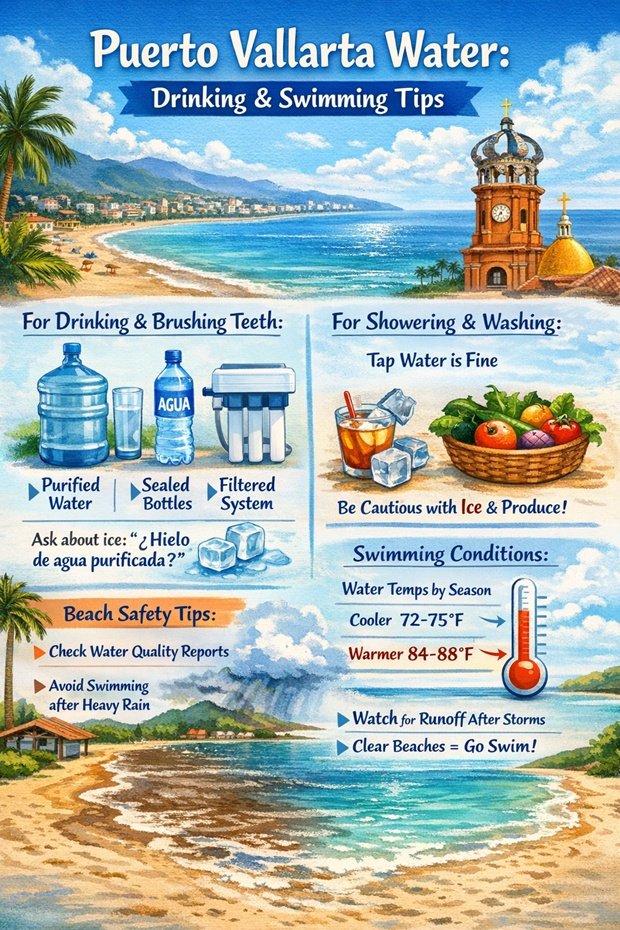
Puerto Vallarta water at a glance: treated vs. travel-safe
Puerto Vallarta’s water is treated at the municipal level, but “treated” doesn’t always mean “travel-safe to drink straight from the tap.” For visitors, the biggest variable is what happens after water leaves the plant: old pipes, building storage tanks (cisterns/tinacos), pressure changes, and filter upkeep can affect what actually comes out of your faucet.
A practical baseline that keeps most trips stomach-bug-free:
-
Tap water: showering, handwashing, washing dishes
-
Purified water (agua purificada): drinking, brushing teeth, coffee/tea, filling bottles, making ice, rinsing produce
That split removes the biggest uncertainty (ingestion) while still letting you live normally.
How Puerto Vallarta’s water supply works (and where problems can be introduced)
The city’s supply is more modern than many travelers expect, and water is treated before entering the distribution system. The catch is the “last mile.” Even strong municipal treatment can be undermined by:
-
Storage tanks (cisterns/tinacos): if not cleaned routinely, water can pick up sediment, odor, and microbial risk
-
Plumbing age/condition: older lines can introduce discoloration or taste changes
-
Water pressure changes/maintenance work: can stir up sediment and make water look cloudy or brownish for a short time
-
In-unit filters: “filter” can mean anything from taste improvement to true purification; maintenance matters more than branding
A quick note on pH (and why it doesn’t settle the question)
You’ll sometimes see tap-water pH referenced (often around 6.5–8.5 as a general range). pH can be a basic marker, but it doesn’t confirm microbial safety at the point you’re drinking it, and it doesn’t tell you what happened in storage tanks or pipes. For travelers, the decisive factor is still: what system is actually delivering your drinking water in your building/unit.
Can you drink the water in Puerto Vallarta? A simple decision framework by where you’re staying
Instead of a blanket yes/no, use this: “What is the drinking-water system at my property?” Apply the framework once, then stop thinking about it all day.
If you’re staying in a hotel or resort
Hotels often make hydration easy, but verify the setup rather than assuming.
-
Look for: water stations, “agua purificada” signage, refill dispensers, or bottled water provided daily
-
Ask (once): whether drinking water and ice are purified
A simple habit: treat water and ice as two separate decisions. Once both are verified, you can relax.
If you’re staying in a vacation rental or Airbnb
Rentals are the most variable, so confirm the plan before arrival.
Ask:
-
“Do you provide garrafón water (agua purificada) at check-in?”
-
“How do refills work during my stay (delivery/contact/concierge)?”
-
If there’s filtration: “Is it RO/UV or basic carbon filtration? When was it last serviced?”
A helpful follow-up: “Is the system intended for drinking water, or mainly for taste?” (Many filters are taste/odor only.)
If you’re staying in a condo complex like Peninsula Puerto Vallarta
Condo living is often “resort-easy,” but units can differ by owner maintenance. The most reliable approach:
-
Keep purified drinking water stocked (garrafón delivery or provided service)
-
If there’s an under-sink system, verify service cadence and whether it’s meant for drinking
-
Use tap water for washing/showering unless the unit’s drinking system is clearly verified
This keeps your routine consistent, especially during high occupancy when buildings rely more on storage and higher daily usage.
Drinking water in Puerto Vallarta: safest options (garrafón, bottled, filtered)
For most visitors, the lowest-friction strategy is: purified water by default for anything you ingest. Pick one main method and stick with it.
Garrafón (purified water jugs): the local default
A garrafón is a large purified water jug (often ~19–20L) used with a dispenser in homes and rentals. It’s common because it’s cost-effective and easy for:
-
drinking
-
brushing teeth
-
coffee/tea
-
filling reusable bottles
-
rinsing produce
Traveler tip: confirm logistics (delivery vs. concierge vs. nearby refill shop) and keep a backup if you’re staying longer so you don’t run out late at night.
Bottled water: when it’s simplest
Sealed bottled water is easiest for beach days and outings. Stick to reputable brands, check the cap ring, and store extras out of direct heat. Many travelers mix methods: garrafón at “home base” + bottles on the go.
Filtered water: what counts as “safe enough”
“Filtered” ranges from basic carbon (taste) to true purification like reverse osmosis (RO) and UV.
What matters:
-
Is it designed for drinking safety (RO/UV) or just taste?
-
When was it last serviced?
-
Do hosts/staff confidently say they drink it themselves?
If answers are vague, default to garrafón or bottled water and keep tap water for everything else.
Puerto Vallarta tap water: what it’s fine for (and what to avoid)
For most visitors, tap water is workable for hygiene. The key is avoiding ingestion.
Showering and handwashing
Showering is typically fine. Handwashing with soap is one of the best defenses against getting sick. The main caution: avoid swallowing shower water, especially kids who might play in it.
Brushing teeth: conservative vs. relaxed
If you wouldn’t drink it, don’t swish it.
-
Most cautious: use purified water to rinse mouth and toothbrush
-
More relaxed: some brush with tap but avoid swallowing—still easy to ingest small amounts accidentally
The conservative habit is cheap, easy, and high-impact for sensitive stomachs.
Cooking, coffee, and dishes
-
Use purified water for coffee/tea and anything where water flavor concentrates
-
For cooking (soups, rice, pasta), purified water is the simplest default
-
For dishes: hot water + soap is generally fine; let items air-dry fully
Boiling helps with some microbial risks, but it’s not a perfect fix for all issues (and doesn’t address everything that can happen in dirty storage).
Ice safety in Puerto Vallarta: treat it as a separate question
Ice is a common “surprise” source of stomach issues because it feels incidental—especially in cocktails and fresh juices. Even great restaurants vary based on whether ice is made from purified water.
What to ask at restaurants and bars
Keep it short and friendly:
-
“¿Hielo de agua purificada?”
-
“Do you use purified ice?”
Optional: “Is the ice delivered or made here?”
If staff answer confidently, you’re probably fine. If there’s uncertainty, choose drinks without ice, sealed beverages, or something hot.
Clues that ice is likely safer (and when to skip it)
Often a positive sign: commercially delivered tube ice and high turnover. Skip ice when:
-
it’s a low-traffic place
-
there was a recent power outage
-
staff can’t confirm the source
-
blended drinks are made with unclear water/cleaning practices
How to wash fruits and vegetables safely (without overthinking it)
In rentals, treat produce like a “tap-water trap” you can avoid easily:
-
Rinse produce with purified or verified filtered water
-
For extra caution with raw greens/berries, use a food-safe disinfecting rinse as directed, then rinse again with purified water
-
Wash hands first and avoid cross-contamination on prep surfaces
This prevents a lot of the most common stomach-upset scenarios without turning meal prep into a science project.
Staying healthy: how to avoid getting sick from water in Puerto Vallarta
Most water-related sickness is preventable with consistent habits:
-
Purified water default (drink, brush, coffee, bottles)
-
Selective ice (ask once, then decide)
-
Clean hands before eating/snacking
Bring electrolyte packets for tours, snorkeling, and long sun days—heat and dehydration can make minor stomach issues feel much worse.
What to do if you get sick
Prioritize hydration:
-
Start oral rehydration salts early
-
Sip steadily (small frequent sips if nauseated)
-
Avoid alcohol until stable
-
Stick to simple foods if mild
Get medical advice sooner if there’s fever, blood, severe dehydration, or symptoms persist multiple days—especially for kids, older adults, or anyone with medical conditions.
Swimming and ocean water quality in Puerto Vallarta: what matters most
It’s important not to mix up “don’t drink the tap water” with “don’t go in the ocean.” Ocean water safety is usually more about weather and runoff timing than anything else.
COFEPRIS beach testing and what “safe for swimming” means
Mexico’s COFEPRIS does seasonal monitoring of beach water quality. “Safe for swimming” generally means bacteria levels fall within recreational-contact limits. The most useful approach is to consult official or reputable summaries of testing, especially around holidays or after major weather events.
Why the water sometimes looks brown (especially after rain)
In Banderas Bay, heavy rain can create temporary brown discoloration from river runoff. That isn’t automatically sewage, but it’s a good reason to adjust timing.
Practical rule:
-
After heavy rain, consider a pool day and swim in the ocean the next day when nearshore water clears
-
Give extra space near river mouths or visible outflows
Red tide and sargassum
For Vallarta visitors, the main variable is usually rain-driven clarity rather than persistent seaweed issues. Sargassum is far more of a Caribbean headline than a consistent Puerto Vallarta problem.
Peninsula Puerto Vallarta: pools, beach conditions out front, and easy swim-day habits
For an effortless routine at Peninsula:
-
Keep drinking-water habits separate from swim-day choices
-
Pool days are a great fallback when ocean conditions look stirred up
Pool basics and family-friendly precautions
Simple cues of consistent operations: clear water, visible drains, posted rules. Easy habits:
-
rinse before swimming
-
avoid the pool right after heavy rain if debris is present
-
encourage kids’ bathroom breaks (helps keep water quality stable)
-
rinse after swimming if anyone has sensitive skin/eyes
The beach outside Peninsula: quick checklist
-
Avoid nearshore swimming immediately after heavy storms if the water looks murky
-
Keep kids from swallowing seawater (small mouths + waves = predictable)
-
Rinse after saltwater swims; consider water shoes if the shoreline is rough/hot
If conditions look off, pivot to pool time and come back when clarity improves.
Puerto Vallarta water temperature by month (ocean) + what it means for comfort
Ocean temps swing seasonally: coolest in winter, warmest in late summer/early fall. Use ranges as a practical guide:
-
Jan–Mar: ~22–24°C (72–75°F)
-
Apr–May: ~23–27°C (73–81°F)
-
Jun–Oct: ~26–31°C (79–88°F)
-
Nov–Dec: ~24–28°C (75–82°F)
What to pack based on water temperature
-
Winter (Jan–Mar): rash guard or thin wetsuit top can make longer swims/snorkeling more comfortable, especially on windy boat days
-
Late summer (Aug–Oct): water can feel bath-like; prioritize sun protection (rash guard, hat, reef-safe sunscreen)
If you run cold, plan longer ocean sessions for late spring through fall and treat pools as your “always comfortable” winter option.
Peak season and “last-mile” consistency: what travelers should verify
When occupancy spikes, properties rely more heavily on storage tanks and consistent on-site purification. Most guests won’t notice anything—unless the building’s last-mile practices are weak. A short checklist prevents headaches:
-
“Do you provide purified drinking water (agua purificada)?”
-
“Will a garrafón be provided at check-in, and how do refills work?”
-
“Is filtration RO/UV or basic filtration, and when was it last serviced?”
-
“Do you use purified ice—delivered or made in-house?”
-
“Do you recommend purified water for coffee and cooking?”
Seasonal updates on <a href="/fr/”https://sixtenrealty.com/news/cofepris-reports-safe-water-quality-at-most-mexican-beaches/”/" rel="”nofollow”">beach water quality reports</a> can also help set expectations around testing cycles and post-rain conditions.
Your Effortless Vallarta Water Plan
Puerto Vallarta water gets much less mysterious once you separate city treatment from the “last mile” inside your building. For most visitors, the smoothest approach is consistent:
-
Tap water: showering, washing, dishes
-
Purified water: drinking, brushing teeth, coffee/tea, bottles, produce
-
Ice: verify once, then decide
-
Ocean: plan around weather/runoff and consult official testing summaries when conditions change
Do that, and you’ll spend far less time worrying about water—and far more time enjoying Vallarta.
FAQs about Puerto Vallarta water
Is it okay to drink the water in Puerto Vallarta?
Most travelers choose purified water (garrafón/bottled/verified RO/UV) for drinking to reduce stomach-upset risk. Tap water is generally treated, but the last-mile variability makes purified the easier default.
Can I brush my teeth with the water in Puerto Vallarta?
If you want the safest routine, use purified water for brushing/rinsing. Many people brush with tap and avoid swallowing, but small accidental ingestion is common—especially for kids.
Is the water in Puerto Vallarta swimmable?
Yes—Puerto Vallarta’s main beaches are typically safe for recreational swimming, with monitoring that can flag changes. Avoid swimming near river mouths right after heavy rain when runoff can affect nearshore water.
What are the water conditions in Puerto Vallarta today?
Conditions change daily. Check a live marine forecast (wind/waves/swell) and local reports the same day—especially after storms.
Can I brush my teeth with Mexico water?
It depends on the destination and the building’s drinking-water system. In tourist areas, purified systems are common, but using purified water is the safest choice for sensitive travelers.
What is the 1/2/3 rule of drinking?
It’s a casual pacing guideline (often “alternate with water” and set a limit), not a medical standard. Adjust based on heat exposure, tour intensity, alcohol strength, and your health.